
A repeating bottleneck in B2B distribution
In B2B distribution there is a repeating bottleneck. The customer has an overdue invoice, so their trade credit limit is locked. A new order stalls, and when the goods rotate fast (fresh food, short-shelf-life products), every hour of delay is a real cost.
Where the delay actually sits
What is interesting is where the delay actually sits. It is rarely a matter of the customer not having the money. Usually the issue is more mundane. The customer forgets about the transfer or puts it off, so you have to remind them, sometimes chase several times, occasionally push hard before they actually sit down and pay. When they do, they make a plain transfer, retype the account number, amount and title, and sometimes make a mistake. And then your company still waits for the funds to post before you can safely release the order. Added up, these small frictions stretch the whole thing from a few hours to a few days, and often longer, because the process gets stuck at "I will pay tomorrow".
What open banking changes
Open banking (PSD2) changes two things in this process: who prepares the transfer, and when you know with certainty that the money will arrive. Below we show it on a simple widget example, but the principle is general and works regardless of the specific solution.
What this widget actually is
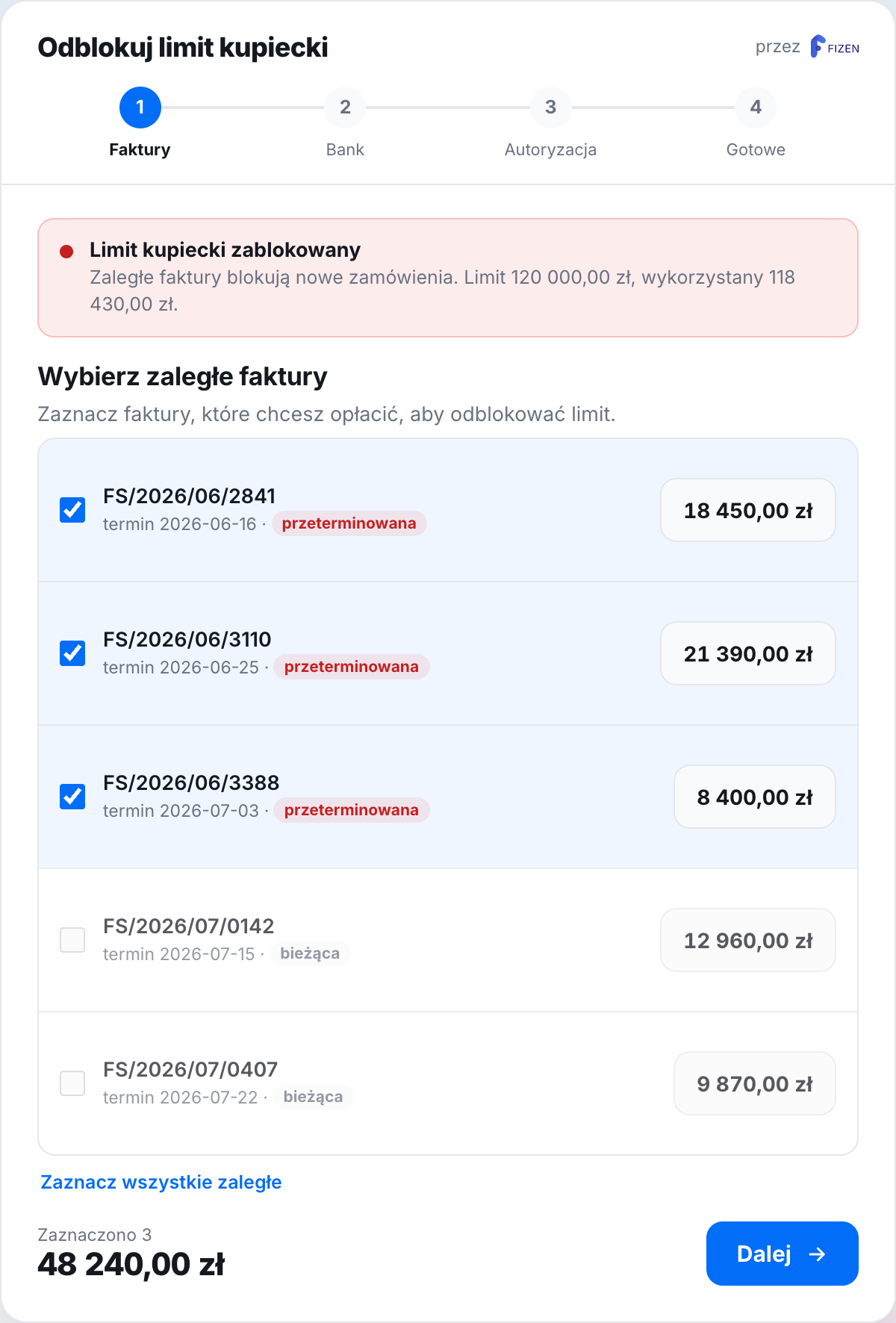
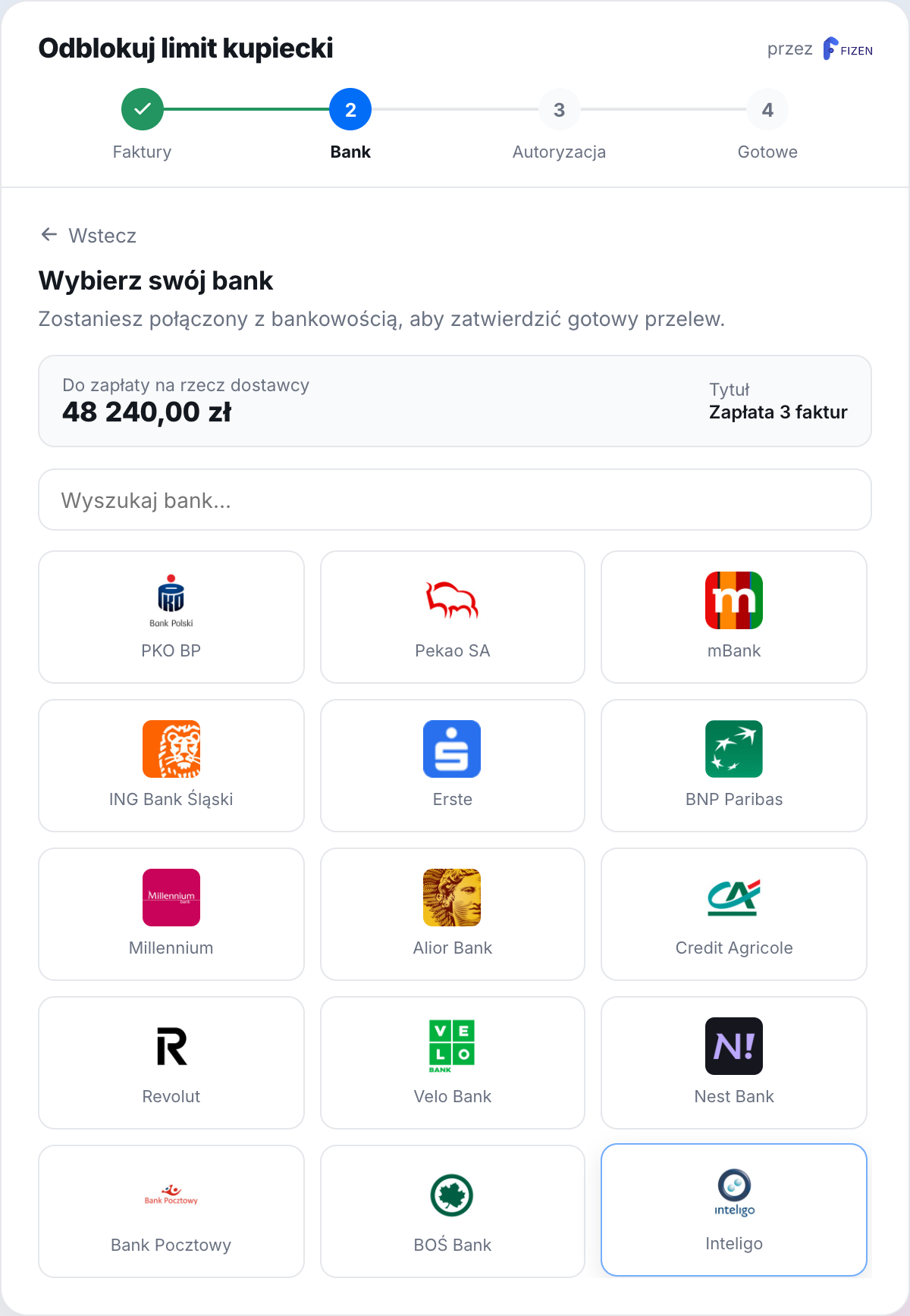
It is a component that gives the customer a ready "pay and unlock" flow - an A2A pay-by-link pattern repurposed for outstanding B2B receivables, and it can be delivered in two ways. First: as a view embedded in the B2B panel where every customer sees their outstanding invoices, ticks what they want to pay, and executes the transaction on the spot. Second: as a link with the payment already pre-filled (specific overdue invoices, or an agreed partial-repayment amount) which the customer only opens and approves. Instead of another chase-up message, you send a transfer that is ready to approve. In both variants the data is prepared upfront, and the customer's part is only the approval.
Step 1. Pick overdue invoices
Step 2. Choose the bank
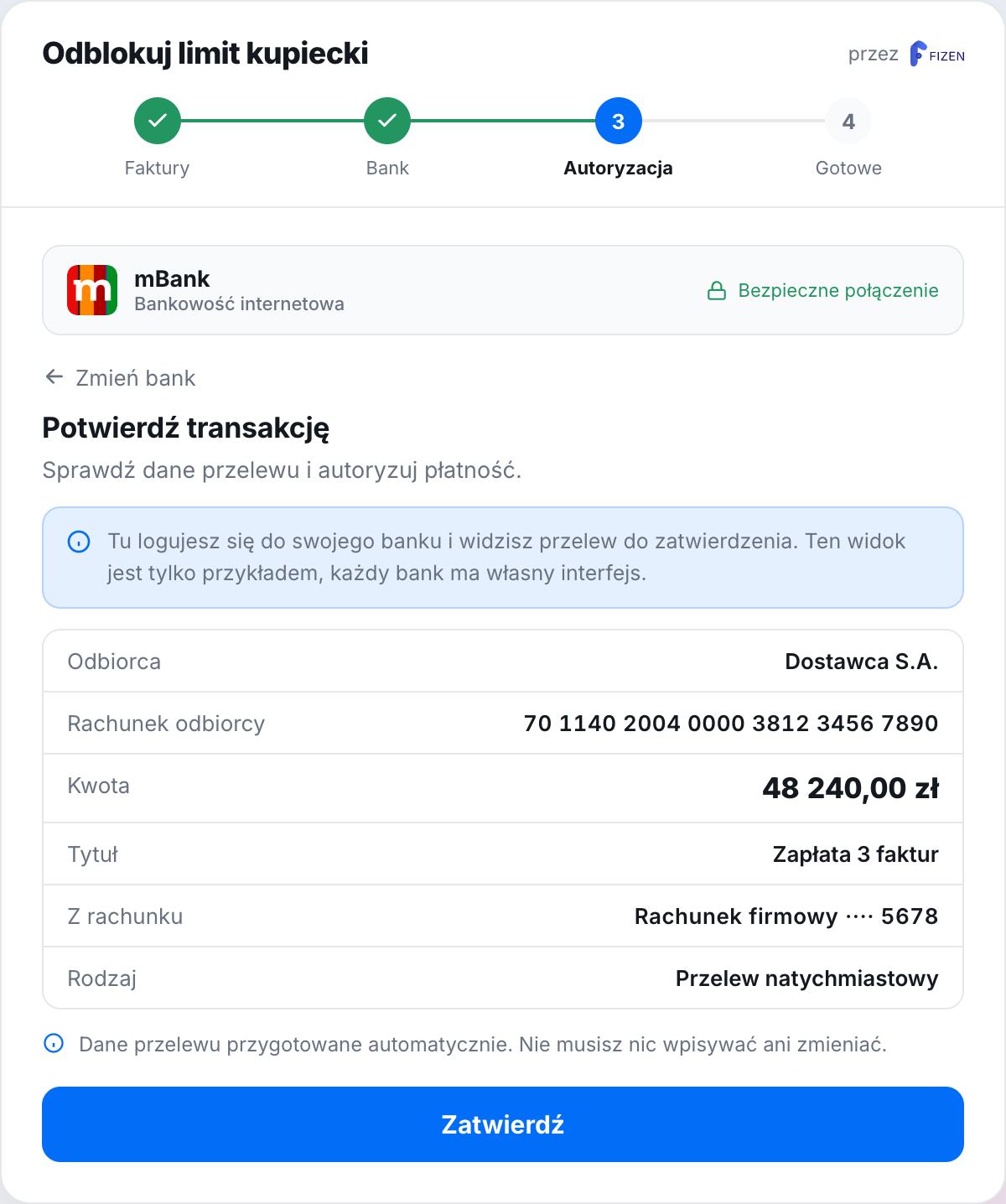
Step 3. Authorize in the bank
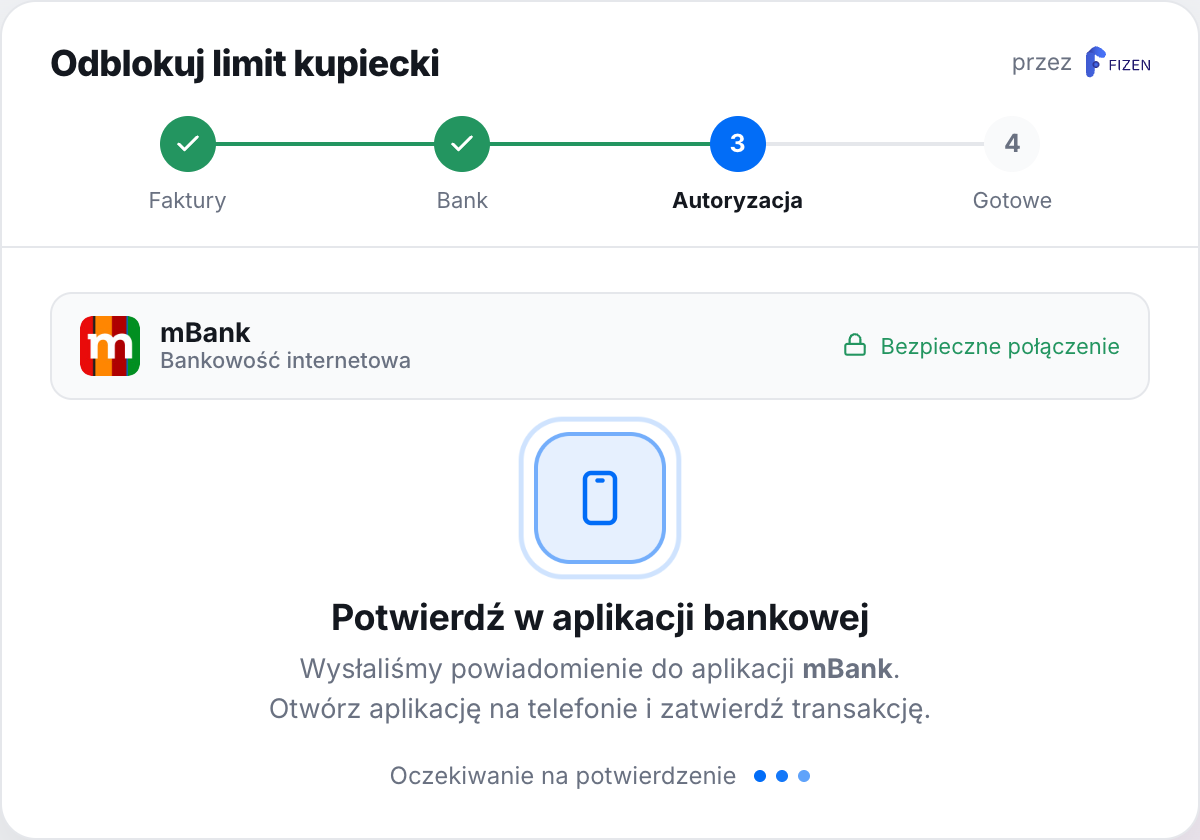
Step 4. Confirmation and unlock
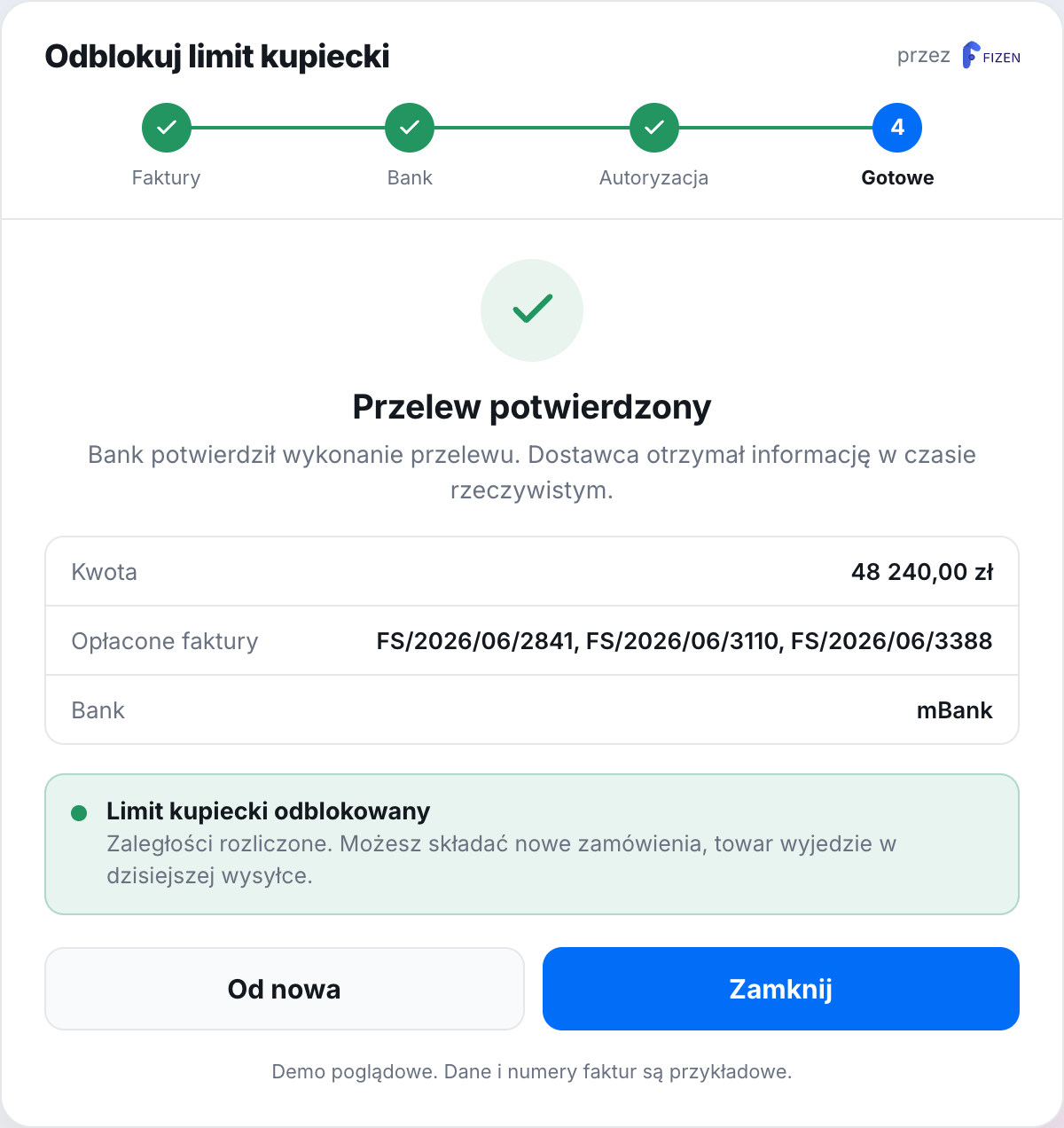
It can be split more intelligently
Because the system prepares the payment and the customer is not hunting down transfer data, there is room for flexibility. Instead of framing it as all-or-nothing ("pay everything or do not order"), you can hand the customer a specific set of invoices or an agreed partial repayment for now - enough to unlock the credit limit and let the next order move. The rest can be scheduled over time. Instead of a debt-collection-style push, the customer gets a ready, easy-to-approve move that also unblocks them.
Why this is faster
Three differences versus "send a reminder and wait for the transfer":
- ✓ The transfer is prepared by the system, not manually by the payer. Typos in the account number and wrong titles - the usual reasons a payment does not link to the invoice - disappear.
- ✓ Bank confirmation arrives immediately after authorization. The decision to release the limit is made against that confirmation, not against an end-of-day statement.
- ✓ The transfer goes account-to-account (see our comparison of A2A vs card-on-file), so there is no chargeback mechanism known from cards.
Not a single-industry pattern
The same pattern fits anywhere a B2B customer runs a balance with a supplier: wholesalers, distribution, franchise networks, marketplaces. The label for the problem varies (trade credit limit, past-due receivables, order block), but the mechanics of the fix are the same. The repetitive, manual part of the process is taken over by technology; the human is left with the decision and the approval.
Not a project for a big rollout year
The important takeaway is this: it is no longer a vision of the future or a project sized for a big rollout year. Open banking has been live in Poland for a long time (Poland has one of Europe's most mature A2A payment infrastructures via BLIK), and plugging this kind of flow into an existing B2B panel or ERP is a one-API integration, not a system rebuild.
If you want to see the widget live or talk about plugging this flow into your B2B panel or ERP, get in touch - we will show a working version and walk you through the integration.